
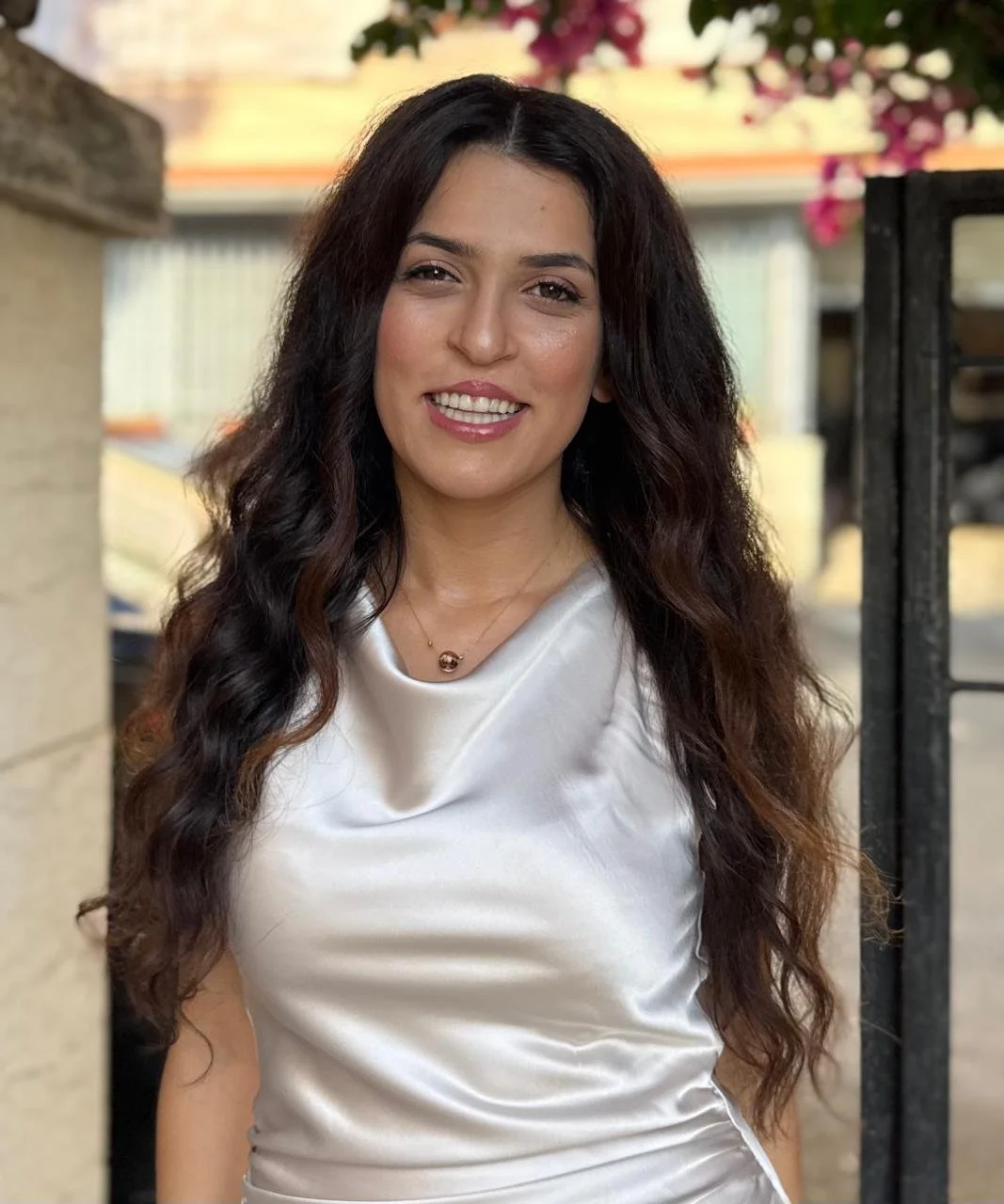

Rania Bou Said
Water & Urban Climate Resilience Specialist (Adaptation and Mitigation) | LEED Green Associate
Strategic sustainability and water resilience specialist, and LEED Green Associate, with over 5 years of experience advancing climate-resilient water, agriculture, and urban systems across Western Asia, North Africa, and the EU.
Experienced in designing and delivering science-based strategies that address water scarcity, urban climate stress, and infrastructure resilience. Skilled in project design, stakeholder engagement, and policy development focused on water security, climate adaptation, and resource efficiency.
Proven track record in translating research into actionable urban and water resilience strategies, including policy briefs, Q1 publications, and project proposals, as well as leading multidisciplinary teams to develop data-driven tools, capacity-building programs, and targeted communication outputs.
Extensive experience coordinating with governments, UN agencies, and academic partners to strengthen institutional capacity and support the implementation of urban climate adaptation and water resilience initiatives. Committed to scaling practical, evidence-based solutions that deliver measurable impact in water-stressed and climate-vulnerable regions.
1. What innovative agricultural practices can significantly reduce water use while maintaining productivity worldwide?
Innovative agricultural practices reduce water use by optimizing irrigation scheduling, application rates, and spatial distribution, rather than by uniformly reducing irrigation volumes. In many production systems, particularly for small and medium-scale farms, excessive water use results from fixed irrigation schedules, poor field-level calibration, and lack of differentiation across soil types and crop growth stages. While sensors and precision tools can accurately quantify crop water demand, they are effective only when their outputs are simple, directly interpretable, and translated into clear irrigation actions that farmers can implement in the field.
Beyond irrigation management, soil and crop system design plays a critical role in water efficiency.
A promising approach is adding biochar and encouraging fungal-dominated soil systems, soils can store more water and release it slowly to plant roots. This improves water availability during dry periods and reduces the need for frequent irrigation, while also supporting healthy plant growth. Another effective practice is the strategic use of mild, well-timed water stress. Applying controlled water deficits during non-critical growth stages can lower total seasonal water demand without reducing yields, and in some cases can even improve crop resilience and quality.
Moreover, crop system design also plays an important role in reducing water loss. Intercropping with species that shade the soil but transpire less than the main crop helps lower soil temperatures and reduce evaporation, leading to lower overall water use. Similarly, the use of living mulches and low-evapotranspiration (low-ET) cover crops replaces bare-soil evaporation with more efficient, lower-cost transpiration, improving soil health while conserving water. These practices save water without sacrificing productivity.
2. What technologies offer the highest potential to optimize agricultural water use in arid Middle Eastern climates?
Optimizing agricultural water use in arid Middle Eastern climates requires different solutions for different crops, supported by smart management and nature-based innovations.
For leafy greens, herbs, and vegetables, controlled-environment agriculture such as hydroponics and vertical farming is considered water efficient. These systems can achieve higher yields while using a fraction of the water required in conventional farming. The system is closed, water is recycled, and there are no losses from evaporation, this is an advantage for hot environments. As for staple crops and orchard trees, precision drip irrigation is also an effective solution, where water directly reaches the root zone, minimizing evaporation and deep filtration losses that are common in sandy soils. This targeted approach ensures that each drop of water is used efficiently, supporting healthy growth and optimized yields.
Beyond crop-specific technologies, advanced water management tools play a critical role. The use of smart irrigation systems, which consider soil moisture sensors, weather data, microclimates, crop water requirements allow farmers to apply water only when and where it is needed. These technologies reduce over-irrigation, prevent water stress, and tailor irrigation schedules to match real-time field conditions
Finally, nature-based solutions can further enhance water efficiency and ensure heat and drought resilient farms. Materials such as hydrogels can be incorporated into soils to retain water and release it slowly over time, reducing irrigation frequency and improving moisture availability for plants.
In summary, the technologies with the highest potential to optimize agricultural water use in arid Middle Eastern climates are those that align crop type with smart management and nature-based solutions. When combined, these approaches can reduce water use while maintaining agricultural productivity.
3. How can Middle East cities adopt smart water management systems to reduce losses, monitor consumption, and improve efficiency?
Smart water management is not only about technology; it is about how cities are designed, supplied, operated, and used. In water-scarce Middle Eastern cities, especially fast-growing ones, reducing losses, monitoring consumption, and improving efficiency requires systemic change across infrastructure, supply sources, and human behavior.
A key step is shifting toward non-conventional water resources, such as treated wastewater and recycled greywater. Reducing reliance on freshwater and desalinated supplies eases pressure on stressed systems and strengthens the resilience of urban water supplies, particularly in rapidly growing cities. However, making effective use of these alternative water sources requires infrastructure that can deliver different water qualities to different uses.
This is where the rapid urban expansion in the Middle East, especially in the Gulf region, creates a major opportunity. As many cities are being newly built or significantly expanded, water infrastructure can be designed from the outset to support a fit-for-purpose or zoned water approach. Instead of relying on a single, high-quality water source for all uses, cities can develop separate networks that match water quality to demand. Potable water can be reserved for drinking, while treated wastewater or greywater is used for irrigation, cooling, and toilet flushing. This can reduce losses, lower energy consumption, and extend the lifespan of critical infrastructure. A similar zoning concept can be applied to wastewater systems, improving operational efficiency and reducing treatment and transport loads.
However, infrastructure alone is not enough. To truly improve efficiency, cities must also integrate water behavioral science into their smart water strategies. Understanding how people use water, and designing systems, incentives, and feedback mechanisms that encourage conservation, is essential. Smart meters, usage feedback, and awareness campaigns can help residents and businesses make more informed choices and recognize the value of water in a scarce environment.
Together, these approaches allow Middle East cities to move beyond technical solutions and adopt smarter, more sustainable water management systems that reduce losses, monitor consumption, and improve long-term efficiency.