
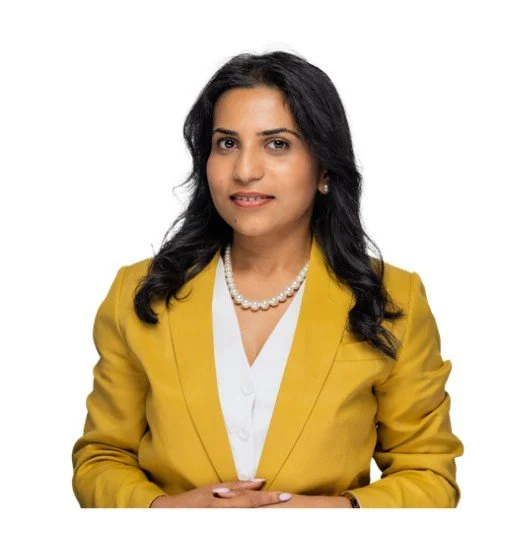

Misha Mittal
Senior Manager-City Advisory, Expo City Dubai / UAE Country Chair - Smart & Sustainable Cities, G100 Mission, Member of ESG Property & Construction Task Force Committee under MEBAS
Misha Mittal is a senior urban strategist and leader driving policies, mega-scale developments, infrastructure planning, and urban sustainability initiatives across the UAE, and the international markets.
She heads the G100 Mission in the UAE as the County Chair for Smart and Sustainable Cities. As Senior Manager – City Advisory at the Global Initiatives and Advisory of Expo City Dubai, Misha works with mayors, inter-governmental organizations, city leaders, technical experts, young professionals and the civil society to deliver transformative urban projects, innovative sustainability strategies and partnerships. She has contributed to landmark developments in the UAE and India and has led intellectual property product development integrating urban planning, ESG, finance, governance, communication into digital metrics in her current role.
A certified Circular Economy Professional and sought-after speaker, Misha is dedicated to advancing SDGs across the value chain.
1. What innovations are helping cities reduce carbon emissions, improve energy efficiency, and optimize urban mobility worldwide?
The World Meteorological Organization has highlighted that the average global temperature has consistently remained at either record or near-record levels in the last 5 years. This trend has impacted on how cities and systems are organizing themselves to safeguard livelihoods and ensure business continuity.
Beyond urban areas, the rising temperatures have resulted in environmental catastrophes like wildfires, floods, and desertification. As natural landscapes and resources are essential to cities for providing clean air and water, mitigating natural disasters, supporting biodiversity, and improving health and well-being, there has been an increasing interest and innovation across industries in working with nature to build climate resilience.
Tools like the digital twins, behavior and sentiment analytics, predictive analytics are all being increasingly deployed by municipalities, government agencies and businesses for real-time data interpretation, policy-making and strategizing businesses. In line with international commitments, there's growing innovation globally to enable the net-zero transition. From design, construction to operations, to the use of passive design, low-carbon materials, and smart technology all are transforming how we build our cities.
At an urban scale, regenerative design and planning, district cooling, geothermal heating and cooling systems, are being increasingly deployed to introduce restorative systems and target optimization of energy usage. Circular economy models are being adopted across the board, especially by start-ups and SMEs as they develop solutions for carbon emissions. Innovations such as cooling paints, Jenga Green Library for sustainable materials, Bio-Graphite, mycelium bricks, regenerative cement, food waste compost, retrofitting solutions, carbon trading showcase different avenues for carbon reduction and enabling circular economy.
In terms of mobility, integrated planning, smart systems, Electric Vehicles (EVs), and their supporting infrastructure have helped rapidly expanding urban areas to curb their emissions, however, there's still a long way to go. Solutions like mobility as-a-service, freight innovations, predictive maintenance, and focus on walkability have proved helpful. Yet, the sheer scale of the problem needs a multi-pronged approach to ensure emission reduction right up to the last-mile connectivity.
2. What global partnerships, standards, or policies are needed to promote sustainable and resilient urban development?
While a multitude of partnership networks, standards, and frameworks exist to promote sustainable and resilient urban development, the fundamental challenge facing cities today is not the frameworks themselves. Instead, it is rooted in how different stakeholders genuinely engage with one another to create value for people.
Existing partnerships and standards have primarily focused on tangible elements like carbon emissions, digital infrastructure, and intercity governance. However, the success of urban economies is ultimately driven by the synergies created by the people who utilize (or fail to utilize) these systems.
For cities seeking the basic requirements to make their commitments credible, bankable, and scalable, depending on the need, the tools have included:
●Global Protocol for Community-Scale Greenhouse Gas Emission Inventories (GPC)
●Sendai Framework for Disaster Risk Reduction
● ISO city standards (e.g., ISO 37120 / 37122 / 37123 series for indicators)
● Green Building Rating systems
● Environmental Product Declarations (EPD)
● Robust funding and financial management practices
Crucially, due to their unique geographical and social challenges, no single solution is appropriate for all cities.
Unfortunately, the design and operation of our cities in the past few decades have inadvertently contributed to issues like loneliness, disconnection, mental-health crises, and challenges with urban heat, unaffordability of housing, food and water security and rising inequalities. Many cities have excelled at measuring metrics like emissions, resilience, and transport access, but they largely fail to measure the intangible elements that sustain society, such as meaning, community cohesion, rituals, or belonging.
The measurement of Social Value is a relatively new metric that only a few cities have begun to explore. Yet, as we all have seen, the invisible fabric of the community has profoundly shaped post-COVID life, influencing priorities, safety, purpose, youth engagement, women’s and community wellbeing, and mental health, and consequently, driving how the economy evolves.
Therefore, there is a clear need for partnerships, programmes, and innovations that actively foster belonging, healing, inter-cultural understanding, and emotional resilience.
The next generation of global partnerships for cities must be designed with a focus on building truly resilient and inclusive futures. This requires multi-stakeholder collaboration centered on project implementation and city-to-city partnerships for expertise exchange and value co-creation. This also means developing policies, standards and credit systems that measure the health of the core elements that power cities: people, nature, and community.
Given the urgency, unless the dialogues are designed around implementation, they will fail to create real impact for people.
3. How can MENA cities implement smart urban solutions that address water scarcity, extreme temperatures, and rapid population growth?
The MENA region currently hosts an urban population exceeding 350 million people, representing roughly two-thirds of its total inhabitants. This urban population is projected to double by 2050. This massive growth is anticipated to increase regional energy consumption by approximately 78%, contributing to over 60% of greenhouse gas (GHG) emissions.
This trajectory heightens the risk of intensified climate hazards, putting lives at severe risk. It is to be noted that while the region is inherently known for its hot and dry climate, the intensifying effects of global temperature rise, alongside significant local variability, necessitate an immediate and profound shift. A systematic, integrated, equitable, and well-informed approach to urban development is therefore not optional, but existential.
In the recent study on heat and transport published by the world bank, we highlighted the criticality of context-specific planning. Solutions must be designed to resonate with local needs and align seamlessly with existing local systems and practices, and inform, encourage and facilitate their improvement.
The MENA region is highly diverse: some cities have high-income economies dealing with challenges typical of contemporary global urban development, while others grapple with the pressures of informal growth, large migrant populations, and severe resource scarcity. Strategies must account for this inherent heterogeneity.
To secure a resilient future, fundamental urban structures must be revisited.
● City resilience strategies, building codes, institutional capacities, and financing frameworks must be updated to ensure cross-sectoral integration and unlock untapped value.
● The intersections of water, temperature, and population catchment must be explored to leverage circular economy principles.
● Innovation incubators must evolve from merely supporting early-stage startups to developing anticipatory systems that prepare cities for decades of future growth. Encouraging non-traditional frontiers is key to solving complex, ecosystem-level challenges.
Potential Nexus Solutions offer concrete examples of this integration.
● Utilizing treated wastewater for district cooling and urban greening.
● Employing sewage heat recovery for building heating and cooling.
● Integrating industrial waste heat for low-cost desalination.
Successful implementation demands cross-domain and cross-sector engagement across all stakeholder levels. It is vital to remember that smart solutions are only as smart as their users. Therefore, every new solution, whether implemented by the government or the private sector, must be embedded with robust education, advocacy, and awareness programmes. This ensures that community preparedness is proactively built to effectively manage and mitigate anticipated risks.