
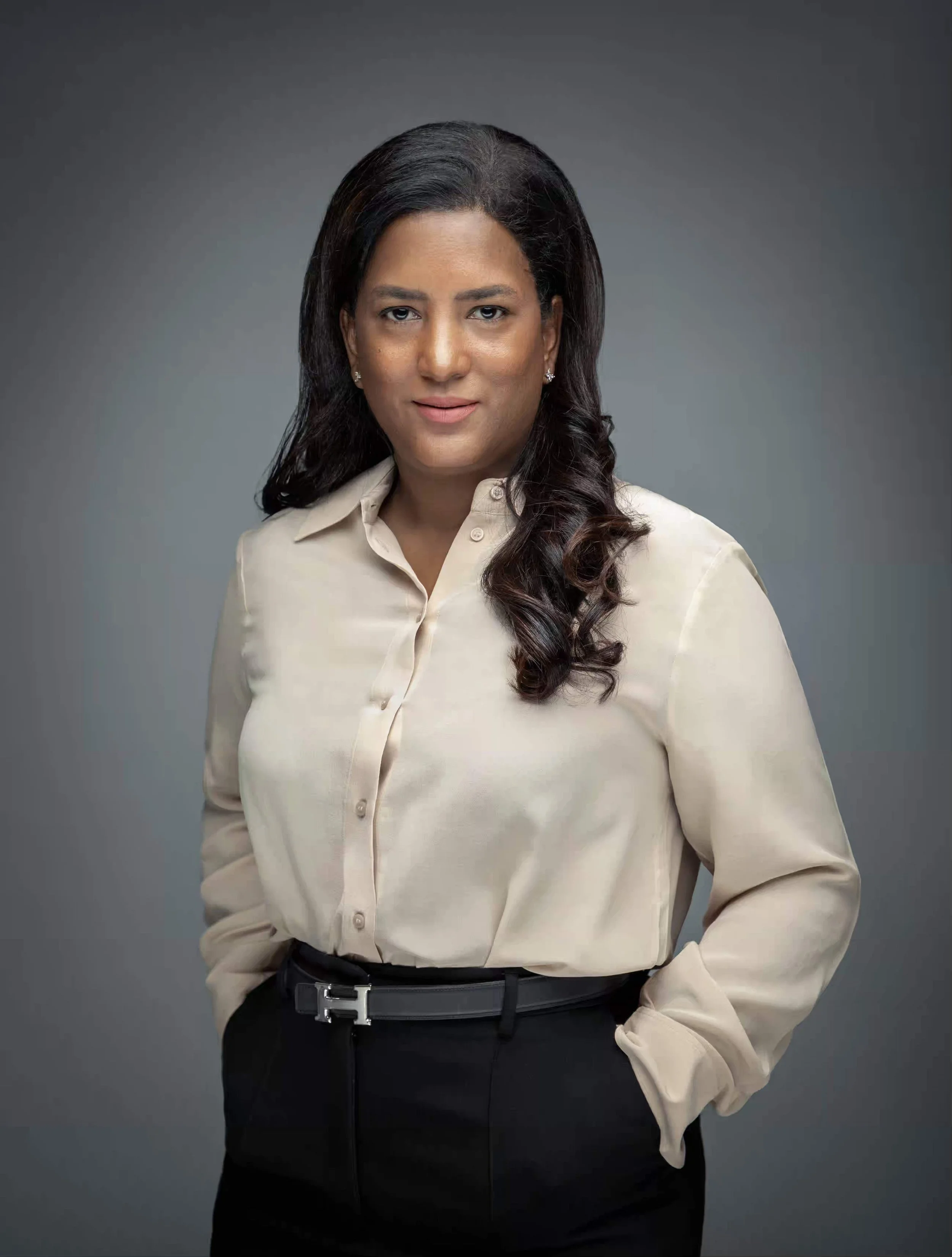

Maritza Carlsson Rivera
Partner at eolos, ESG & Sustainability Expert, UAE
Maritza is an environmental engineer and sustainability expert who has lived and worked across five continents, shaping her practical, people-centered approach to ESG and water-related challenges. With over 13 years of international experience, she advises companies, governments, and development organizations on climate risk, decarbonization pathways, and sustainable infrastructure.
She is a Partner at eolos and an independent sustainability advisor, working across sectors to translate global frameworks such as CSRD, SBTi, The SDGs, and the GHG Protocol into real-world action. Her work spans Europe, Asia, Africa, Latin America, including collaboration with UN-Habitat, SIDA (Swedish International Development Corporation Agency), multinational companies, and diplomatic missions.
Maritza holds two master's degrees in Environmental Engineering and Sustainable Technology from KTH Royal Institute of Technology, Sweden. Fluent in English, Spanish and Swedish, she brings a global perspective grounded in on-the-ground experience, with a focus on solutions that are both technically sound and socially inclusive.
1. What global strategies are proving most effective in reducing freshwater consumption while meeting the needs of rapidly growing populations?
The most successful water strategy doesn’t start with finding more water. It starts by wasting less. In many growing cities, a huge amount of water never reaches homes or businesses because it leaks out of old pipes. Fixing these systems and using smart meters to spot problems earlier often saves more water than building new dams.
Prices also play a role. When water is priced realistically, while still keeping basic access affordable, people tend to use it more carefully. Combined with public awareness campaigns, this approach helps reduce unnecessary use without hurting daily needs.
Another solution is water reuse. Treated wastewater is now safely used for farming. It may sound surprising, but reuse has proven to be on fo the most reliable ways to stretch limited supplies.
The biggest lesson is that water can’t be managed in isolation. Countries that plan water alongside housing, energy and food systems are better prepared to support growing populations without draining rivers and groundwater.
2. What innovative agricultural practices can significantly reduce water use while maintaining productivity worldwide?
Since farming uses most of the world’s freshwater, small changes can lead to big savings. One of the most effective is drip systems, because they deliver water straight to the plant roots, rather than spraying it everywhere. When farmers use soil sensors or weather data, they water only when crops actually need it.
Crop choices matter too. In many regions, farmers are switching to crops that are better suited to local conditions, including drought-resistant varieties.
Soil health is another piece of the puzzle. Practices like mulching and cover cropping help soil hold onto moisture longer. Healthy soils mean crops stay hydrated with less frequent watering, specially during hot and dry periods.
In water-scarce areas, treated wastewater is becoming an option for irrigation. It gives farmers a better supply while still protecting the freshwater for drinking.
3. How can governments and industries collaborate to strengthen global water governance and encourage more efficient water use?
Solving water challenges takes teamwork. Governments and industries are more effective when they share both responsibilities and data. When companies measure and report their water use, it becomes easier to spot waste and reduce risk.
Partnerships between public and private sectors are key. The government can set long-term goals and rules, while businesses bring investment and innovation. Together, they can scale up solutions like water recycling, efficient cooling systems and smarter infrastructure.
Clear regulations help too. When efficiency standards are fairly enforced, companies are more willing to invest in better technology. Incentives such as tax breaks or funding support can speed things up.
Water doesn’t stop at borders, so cooperation between borders matters as well. Shared rivers and aquifers need joint management to avoid conflict and ensure water remains available for future generations.
4. How can Middle East cities adopt smart water management systems to reduce losses, monitor consumption, and improve efficiency?
Many desalination plants are being designed to run on a mix of solar, wind and grid electricity. This hybrid approach lowers emissions while keeping supplies reliable. Energy storage, like batteries, helps balance renewable power when the sun isn't shining.
Technology is improving as well. New membranes and efficient reverse osmosis systems mean desalination now requires less energy than it did a decade ago.
With planning, the countries can expand desalination and renewable energy together. In this way, they can meet water growing needs without increasing reliance on fossil fuels.